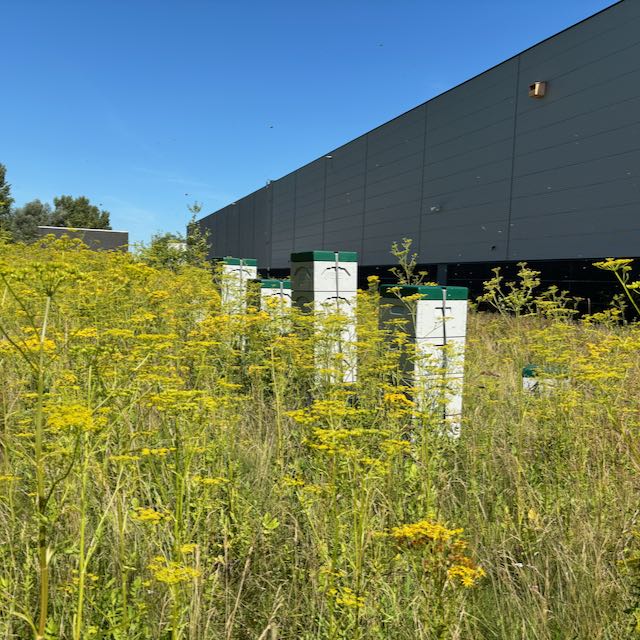
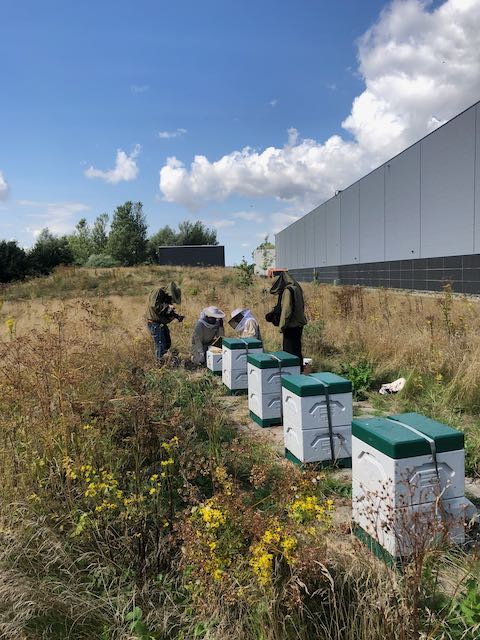
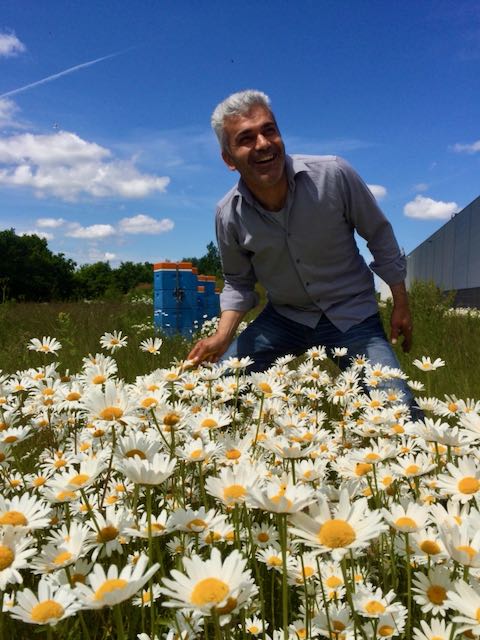
You know L’Oreal from the shampoo, lipstick and sunscreen you use regularly. Outside town, the company has a vast distribution centre. Behind the building there is a car park. Behind the car park there is a field. A few years ago, L’Oreal asked us to put some bees on the field. We did this, and Aref, our beekeeper began to check on them. He’d knock on the door and the director of the centre would come and watch as he tended to the bees.
After a couple of times, Theis, the director called me. What more could they do? Theis actually already knew the answer. They stopped cutting the grass. They planted fruit trees and berry bushes. That summer was dry, so volunteers ran out with buckets to water the new trees. The back doors were opened, and staff began to hold meetings and eat lunch in the garden. They picked the flowers and gave them to each other.
Birds and animals were noticed, so they cut holes in the fence and put up bird boxes and hedgehog dens. When the time came to harvest the honey, they bought the whole lot, and sent a glass to every hairdresser and beautician in Scandinavia.
Head office heard about the initiative, and now every year a team visits Bybi for a team building day. One year, a new initiative was launched at Bybi, and the company sponsored our work with 15 schools in the city.
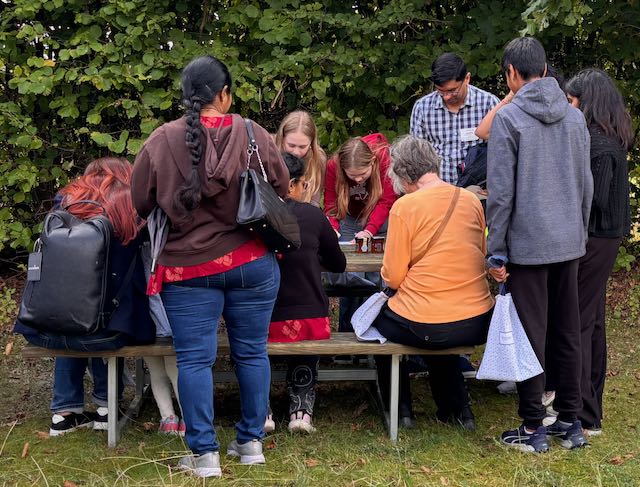
We were invited to the Christmas party, where we held an installation, sharing honey with the staff and their families, on the condition that each recipient should plant flowers to thank the bees and share with someone they cared for.
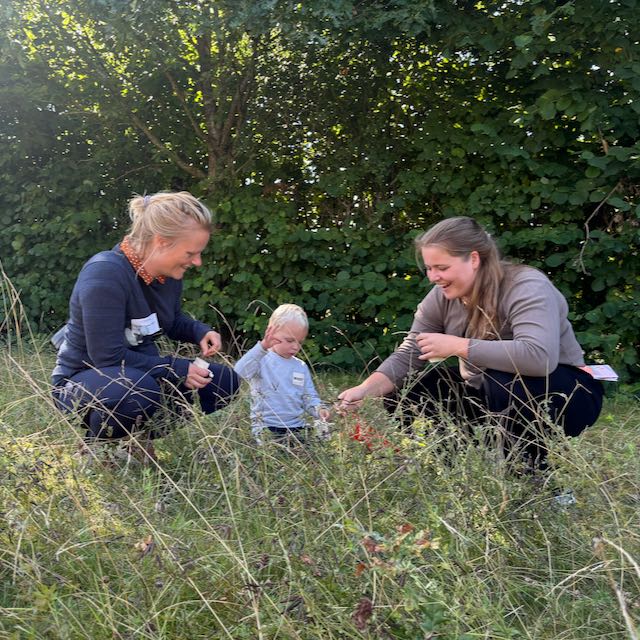
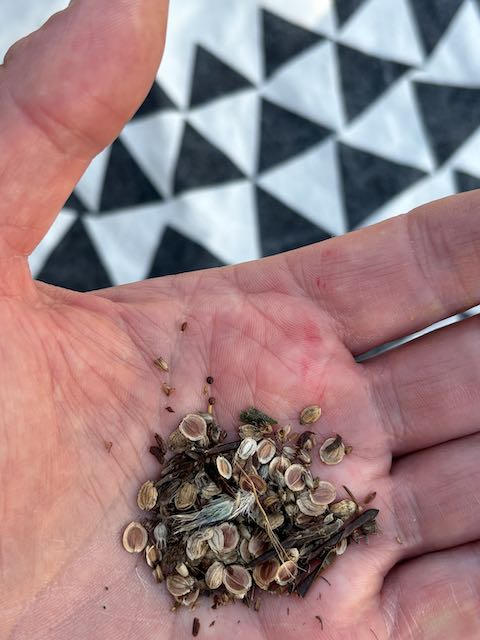
At the recent Open Day at the distribution centre, Theis showed of the sparrowhawk nesting against the factory like a proud father. 250 employees ‘told the bees’ about the relationships that matter to them. Then they collected seeds from the wild plants in the field, honey collected from the same flowers, and took them home to plant.
Money was present here too. L’Oreal paid for the bees, for the flowers, for the honey, for the teambuilding, for the Chirstmas party and for the garden. Much more than could be expected from selling a product alone.
None of this was planned. When you look at the developing relationship, it is impossible to find a product. The garden evolved through a combination of curiosity, connection and imitative. We do this with about 20 businesses in Copenhagen. Each one is a little different. Sometimes it is a director that connects with the bees. Sometimes it is a chef or a gardener. Perhaps you would like to join?