What can Money Learn from Water?
In the ‘Parliament of Things’ conversation inspired by the philosopher Bruno Latour, it is not just people that speak, but also objects. We have used it to explore new perspectives on many dilemmas – including money.
Some of the most powerful moments happen when Money meets an unexpected question. Poor Money can initially be very confident, but often reveals a split personality when confronted. Money can be enthusiastic, generous and caring – but suddenly turn and become mean, selfish and irresponsible. In one conversation, Money was drawn out of deep self absorption by Butterfly, as they both recognised in each other a possibility for transformation. In another, Money and Water discussed Care. In what circumstances do Money and Water truly learn from each other in a relationship of care. How can Money and Water care for each other?
I discussed this conversation with Lene Degget, an artist from the island of Bornholm. She immediately identified a circumstance where Money and Water share this possibility.
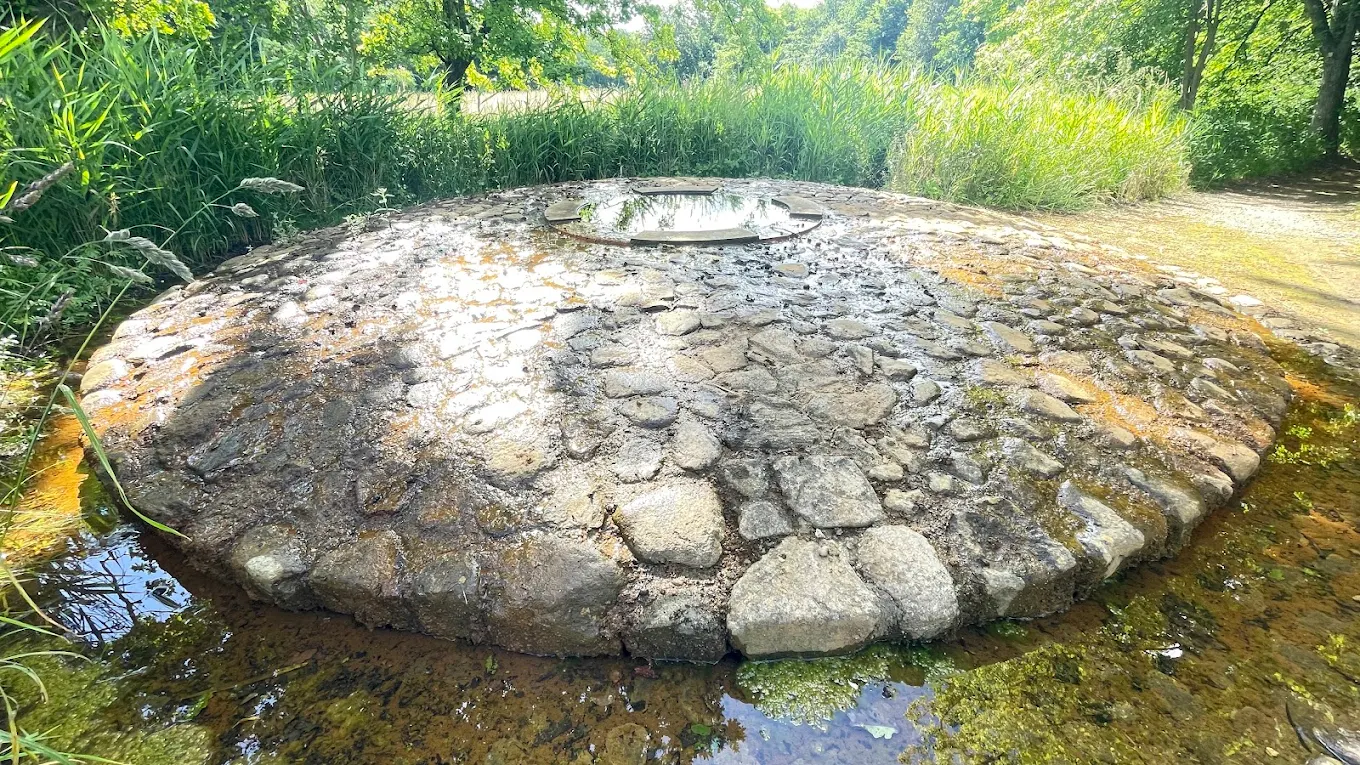
“Bornholm is famous for it’s sacred wells’, she explained. ‘For generations, pilgrims have travelled to these water sources and tossed in a coin, along with a wish. People still do it today. When I was a child we would scramble into the springs and scoop out all the coins’.
‘Amazing!’ I replied. ‘And what did you do with the money?’.
‘We took it to the kiosk to buy ice cream and soda’.
The story shows two things: Firstly a wonderful example of how money can be present without ‘product’. Secondly, how money can slip in and out of a capitalist economy. At one time a gift, a wish, an abstract hope. Shortly afterwards it re-enters the economy through the kiosk. I told Lene’s story to another underemployed friend. She gave me a searching look. “I want a job as a Wishing Well”, she said.