How much does the honey cost?
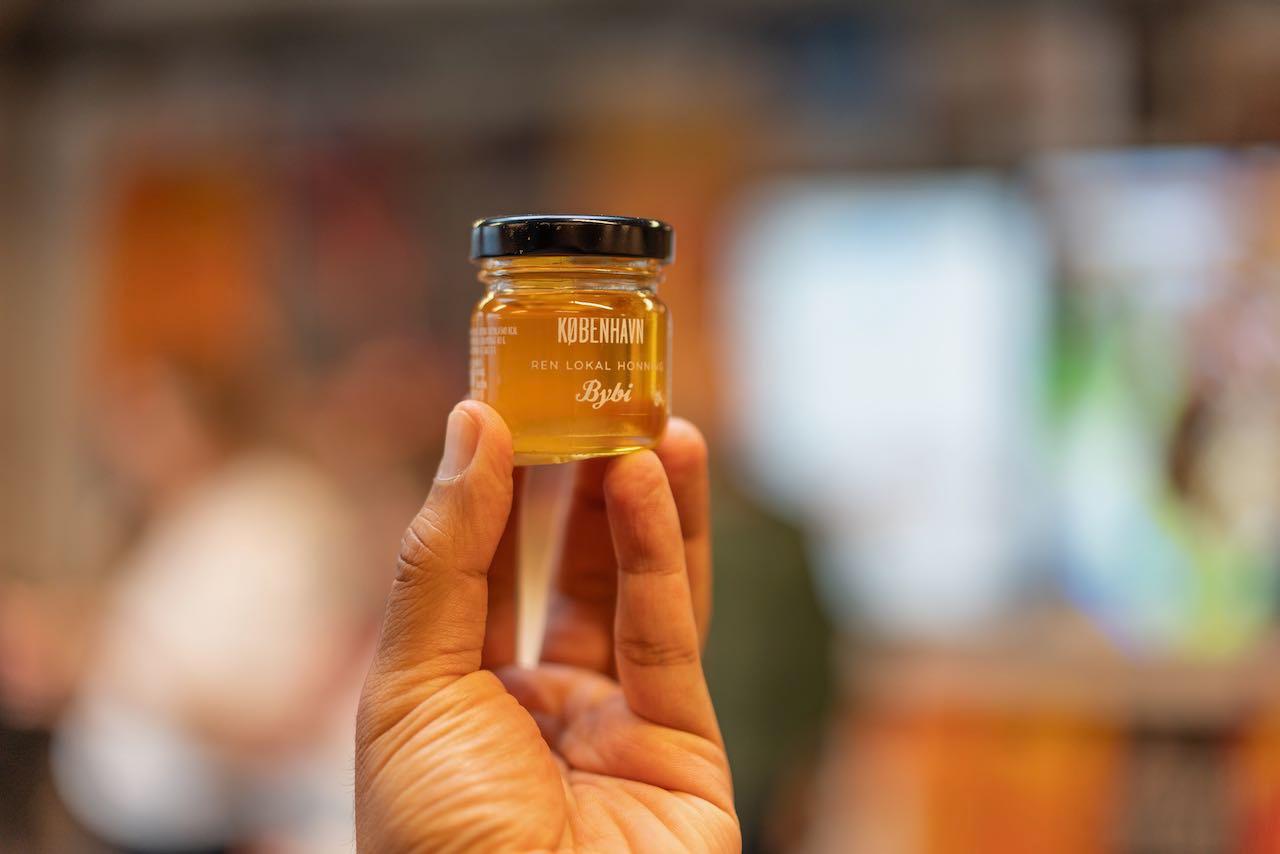
The bees gather 4-7 tons of honey each year. What do we do with it? How much does it cost?
The answer is that ‘It Depends …’
It is interesting that Honey and Money both pose the same question: How can they be shared to have the most nourishing effects on all the relationships that connect people plants and animals in our city?
Sometimes the best way to share the honey is when it costs nothing at all.
At gatherings like festivals, summer parties, weddings, funerals and confirmations participants and guests are offered a glass of local honey. But it is not free. It comes with conditions. Share with someone you care for. Plant a flower to thank the bees. In this way, the honey becomes an engine of community connections. Bybi receives money to stage the event. This money builds connections on our side, as we use it to support our families and care for the bees.
A second answer is that “You Decide!”.
We have done experiments where we invited people to pay what they choose. Some people are generous. Some people shared a song, dance or poem in exchange for the honey (which is always appreciated!). Almost half of people shared just 10 or 20 Danish krona. This feels a little insulting to us. Does it reflect what people imagine goes in to preparing the jar of honey? Are they comparing with supermarket prices? What does it reveal about the relationships between money, work, landscape, supply and demand that characterise products in a supermarket?
A third answer is ‘Lets discuss it’.
All market traders understand that negotiating is less about getting the best price, but about establishing a relationship. We often invert the traditional logic and hold a ‘reverse haggle’. In a reverse haggle, the ‘seller’ starts low, for example at 1kr for a glass of honey. They ‘buyer’ starts high: say 10.000kr for a glass of honey. The seller slowly increases the price, while the buyer comes down until both feel that they are treating the other as respectful partners and no one feels bad. A reverse haggle results in some interesting conversations and helps everyone to be more transparent and responsible about their feelings and motives. It shows that there is more to money than supply and demand. It’s fun to try a reverse haggle in a group situation.
A fourth answer is to buy the honey in a shop.
There are a small number of specialist shops where you can buy Bybi honey over the counter. We don’t have any marketing, social media or sales staff. Occasionally shops will contact us and ask if they can sell our honey. That’s usually OK. It gives us a more predictable turnover. But it is not as fun.
Do you have an idea about what the honey should be used for? Or how it can be exchanged for money? Contact us to talk about it.