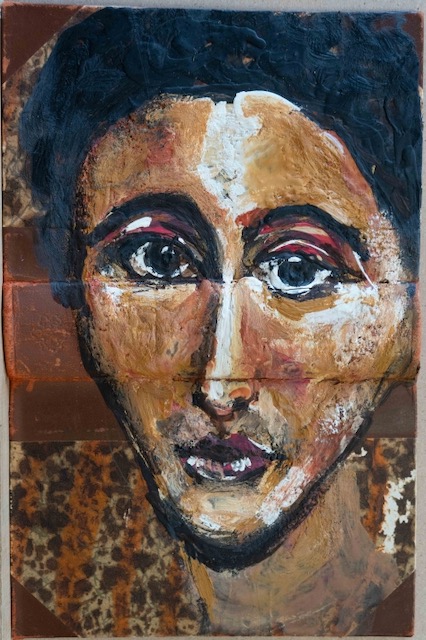
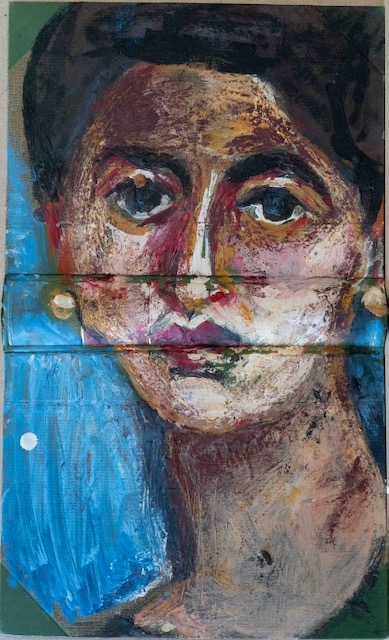
About 2000 years ago, each of the last generations of Egyptian mummies was buried accompanied by a beautiful portrait of the person wrapped inside. The portraits were painted to please the eyes of gods, not people, and captured not just lives lived, but also places. They were painted in melted beeswax and coloured with mineral pigments gathered throughout the ancient kingdom. As ‘pieces of place’ they were embedded in cultural practices that honoured both life and landscape.
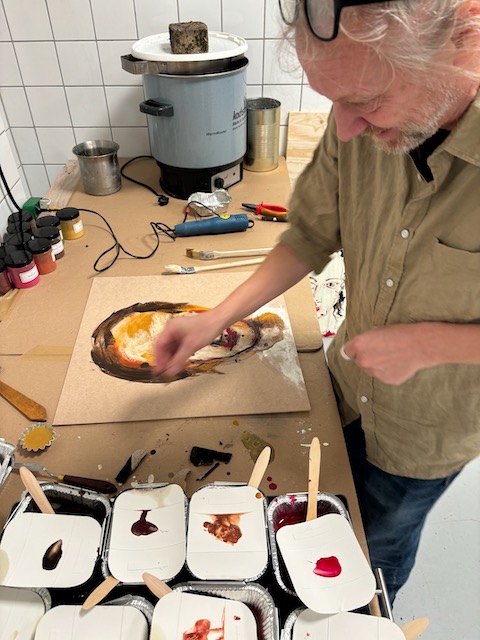
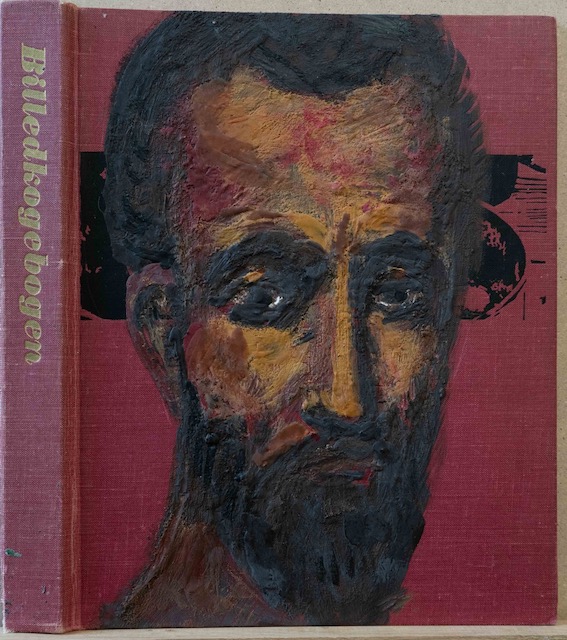
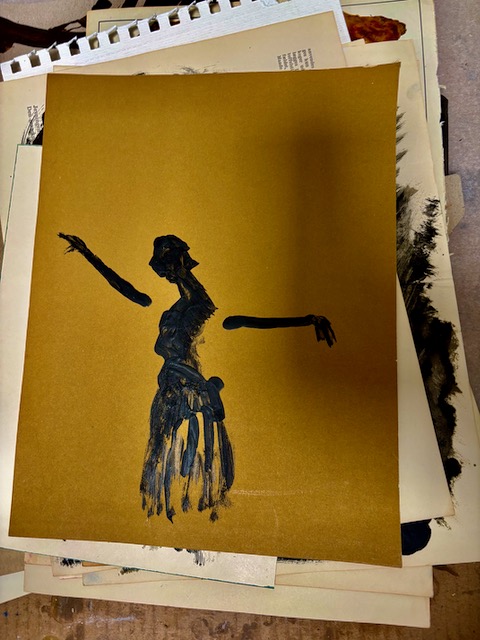
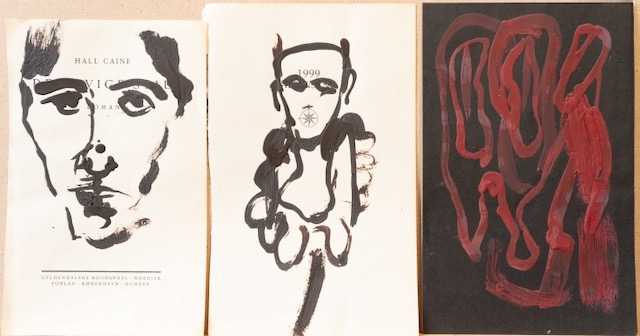
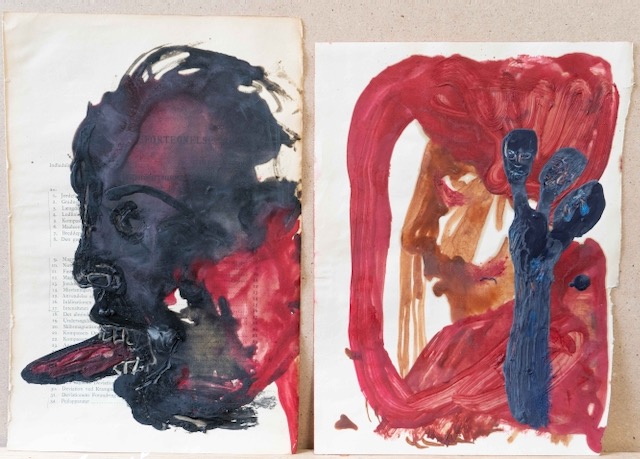
In December 2024, artist Peter Bjørn Franceschi joined Bybi in a quest to recreate these techniques using Copenhagen beeswax and mineral colours of the same type. Painted onto old books scavenged from recycling centers, his paintings became pieces of a new place – capturing patterns of knowledge, time and landscape. But they also invited a further speculation: What practices of care could circulate around these modern forms? How could modern communities cultivate artworks that speak to the modern desire for connection, care, pleasure and curiosity in our associations with animals, plants and each other in Copenhagen?
Still painted with beeswax, some of Peter’s artworks became more abstract and embryonic, pointing to the possibility of a new interpretation. Meanwhile, in Bybi we were exploring the history of honey as a sacred mateial, shared to build associations among human and sacred communities in traditions dating back to Ancient Egypt.
Could the waxy artworks and the honey come together, so both the artistic practice and honeymaking could circulate in the modern urban landscape?
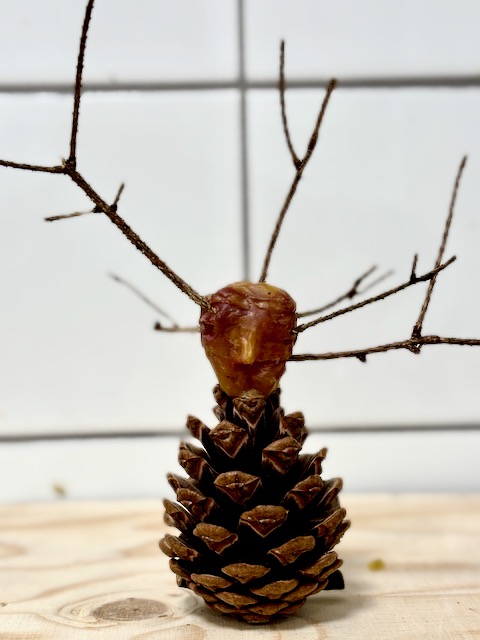
Together, we proposed a new form: We imagine the artworks as a ‘totem’ that mirrors the communities of animals, plants and people that gather around the bees. The artworks are displayed in businesses and organisations also inhabited by the bees. Observing them, you are invited to share a responsibility: Share some honey with someone you care for. Plant a flower to thank the bees.
The collaboration formed the basis of our ‘Telling the bees’ project supported by the Novo Nordisk Foundation.