Some time during industrialisation, work became a commodity. Something measured in units of time and productivity and sold for units of money. This version of work is an curious way to measure our physical impact on the world and our ways of belonging to a community – especially as we increasingly have to compete with machines to participate.
Despite being called ‘workers’, bees have no bosses and no targets. Their interest in flowers is, well, if not sexual, then at least sensual. One imagines that their motives are pleasure, curiosity and care.
How can the movement and transformation of honey, glasses, labels and care for people and animals be reframed as a process of community-making?
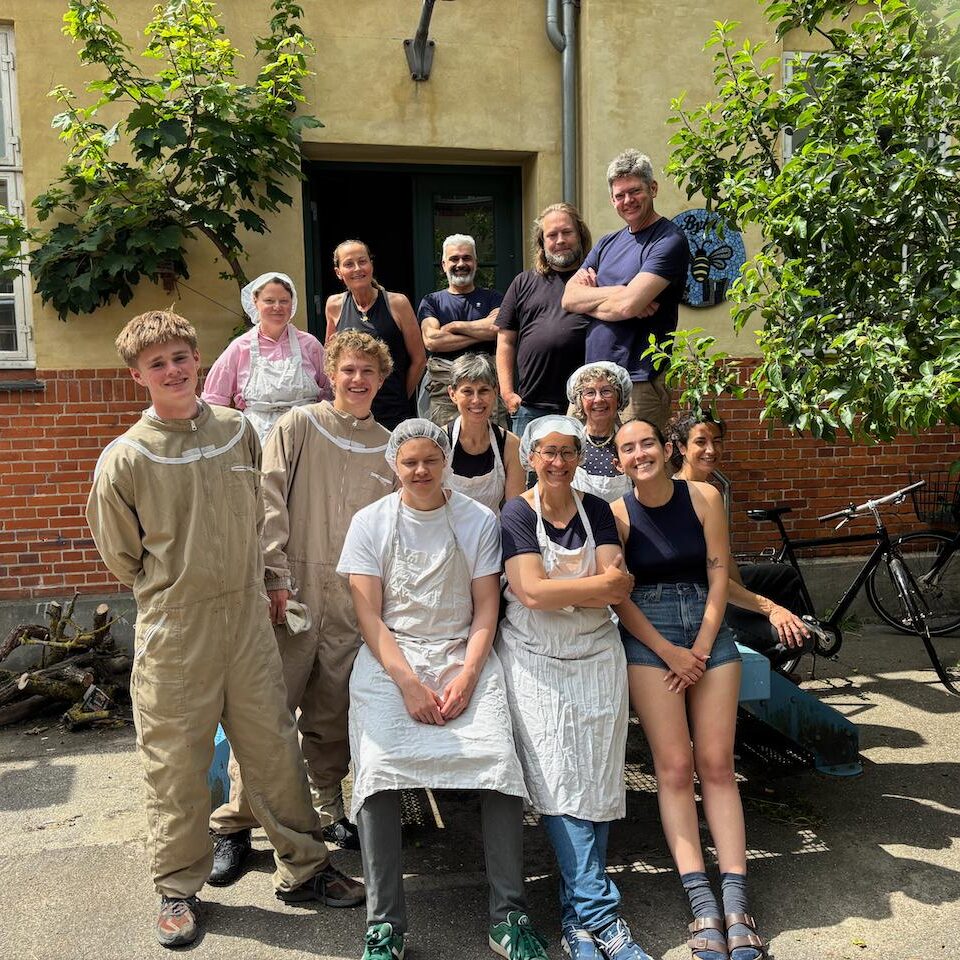
At Bybi we care for 80-100 colonies of honey bees that individually require boxes, wax, food and flowers. The bees collectively gather 4-6 tons of honey from the city’s parks and gardens every summer. It takes human hands and minds to prepare and package all this material – and a flow of glasses, labels, boxes and buckets.
How can we involve our human community in these currents?
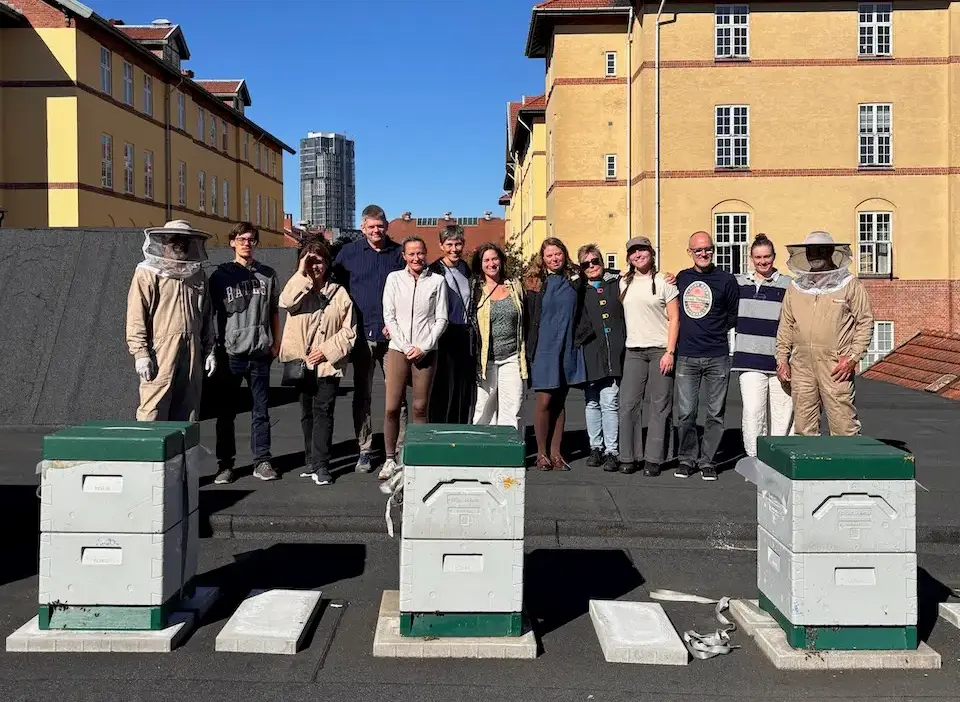
We are grateful for the support of a group of volunteers who help us every Tuesday and during the harvest season. Last year, we were 43 people from over 20 countries. We organise regular events and try to create a space that is open for sharing of each others interests and culture.
We also have paid staff, but we are not an employment creation organisation. In a time when the logic of work is threatened by economic challenges and new technologies, our focus is resilience, mutual aid and community building. This too, raises questions.
How can we improve the diversity of our community? How can we support members of our community in their own efforts to achieve economic autonomy and a sense of belonging?