Hello, Oliver!
Hope you’re doing well!
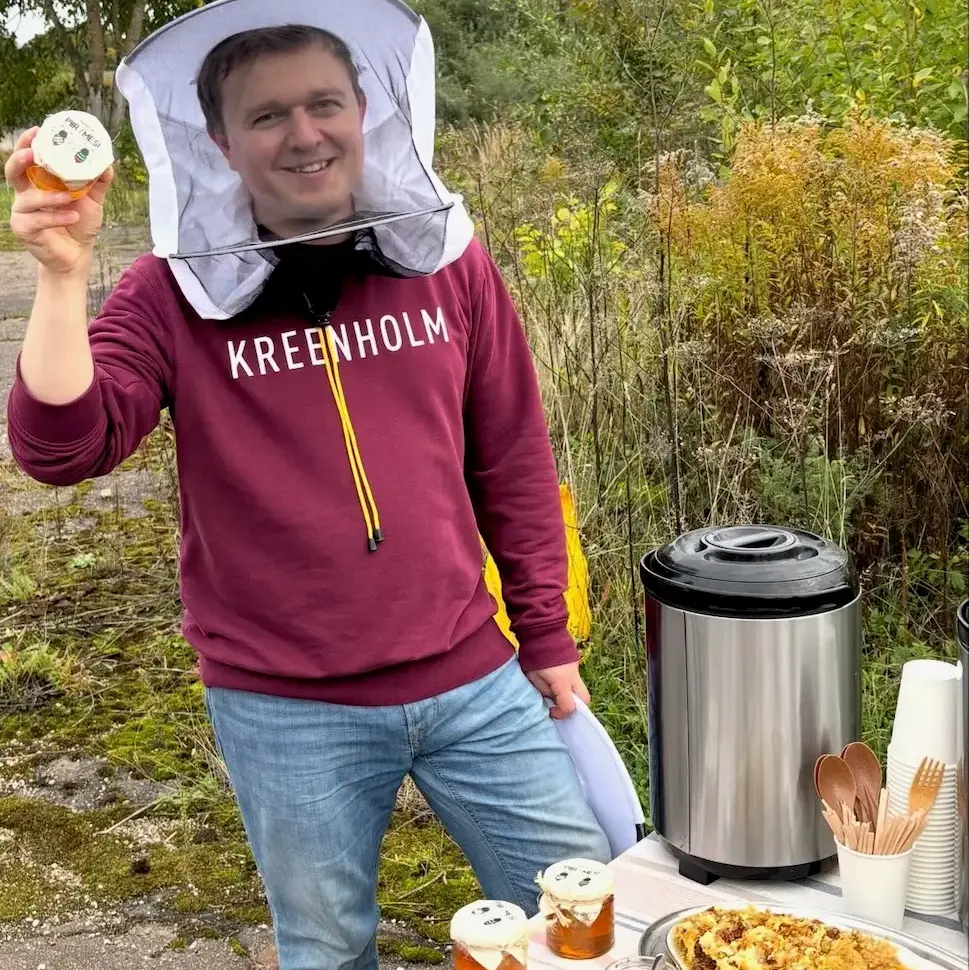
I would like to share the results of my bee project here. We already harvested honey – And I’d like to mention again that your project in Copenhagen was an inspiration for me.
Maybe you’ll interested to hear more about conception which came to my mind here:
Some time ago, I moved to the city of Narva (Latvia) for work, and from day one I kept being asked the same two questions: whether I was a local and whether I was an artist.
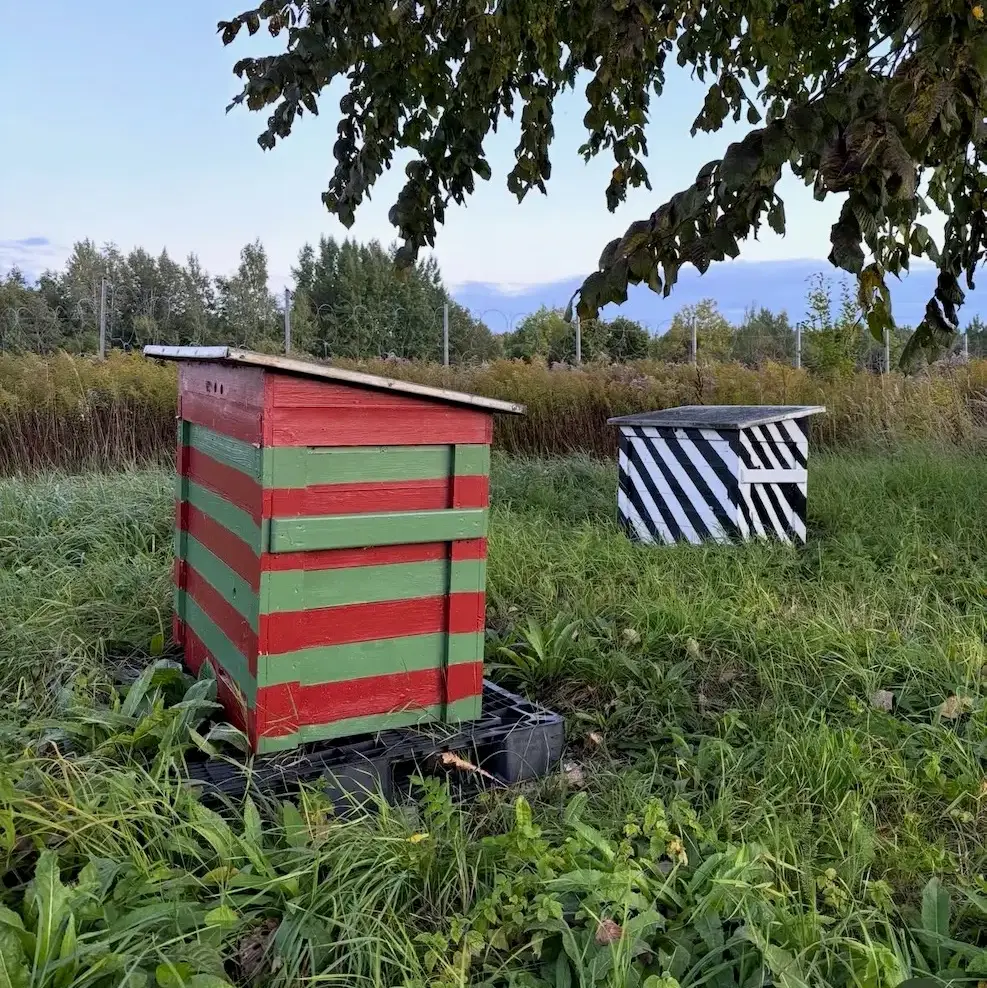
My answer to both was usually “no.” But recently, I made my first installation: two beehives painted in the colours of border posts, placed on the grounds of an abandoned factory just a few metres from the temporary control line between Latvia and Russia (the two countries have never ratified a border treaty).
The idea came about spontaneously. It all started in Copenhagen, where I had been several times for the Metropolis performing arts platform. That was also where I discovered Bybi (“by-bi,” literally “city bees”), a project by anthropologist Oliver Maxwell, who placed bee hives all over the city. The honey produced in different parts of Copenhagen had noticeably different flavours. At the same time, the project involved local residents, teaching them the art of beekeeping and raising awareness of the role bees play in the wider ecosystem.
When I came back, I wanted to do something similar, but rooted in the local context. The idea kept buzzing around in my head, but I had no clear sense of what form it should take.
Last autumn, I was in New York visiting an artist and told him about the idea. He suggested calling the project “KGBees.”
Eventually, in May, the hives found a new home at the old factory and began a life of their own.
Summer is the busy season for bees: they are occupied with gathering pollen and generally pay little attention to people or animals passing by.
Things were going well in the “Estonian” hive, and there was plenty of honey. In the “Russian” hive, however, for some reason there was none. The bees attacked everyone in sight and tried to overthrow the queen, but the attempted coup was suppressed, since it would have resulted in the loss of too much valuable time. The queen remained in place. Political “stability”.
The work gradually acquired many layers:
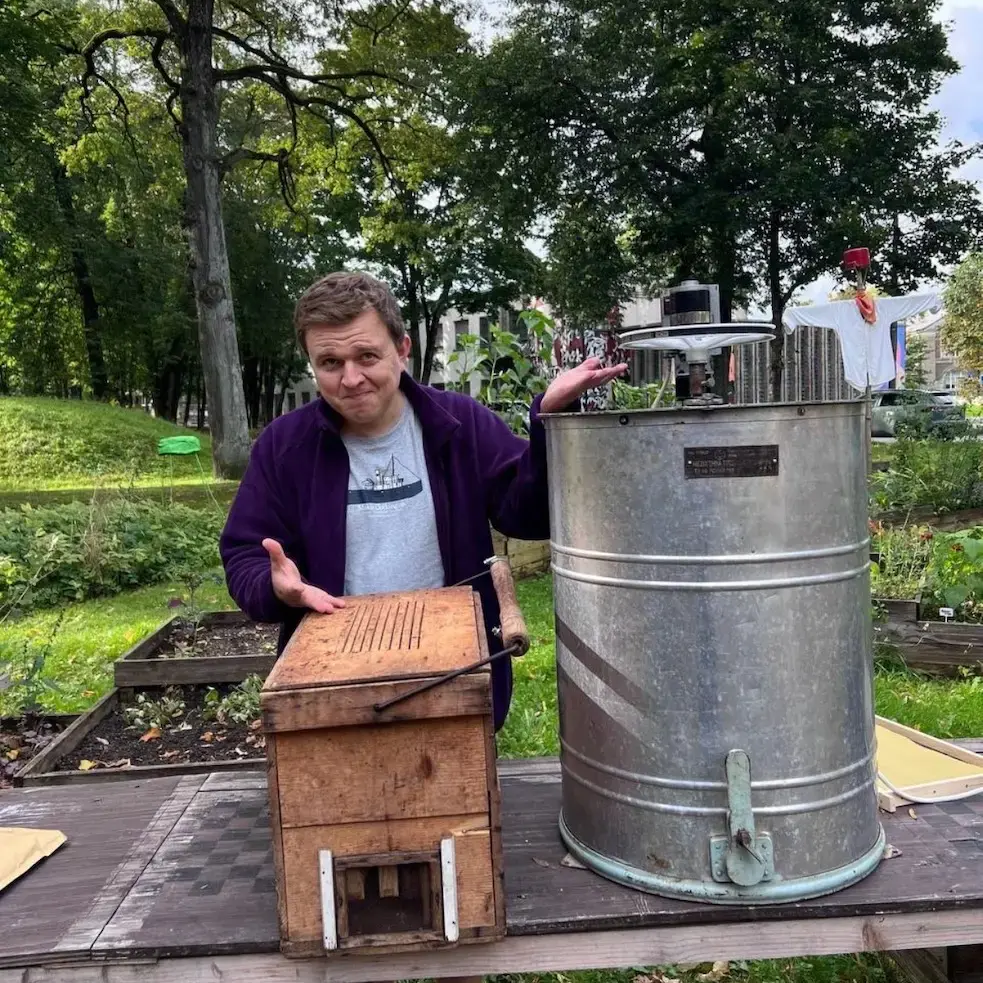
The season has now come to an end, and I extracted the honey myself — which was no easy task. It turned out to be moderately sweet, with a slight bitterness.
You can taste the border.
I’d be curious to hear what it sounds like for a person from outside here.
Thank you!
Gleb Kuznetsov
NART koordinaator
Eesti Kunstiakadeemia Sihtasutus
Joala 18, 20105 Narva