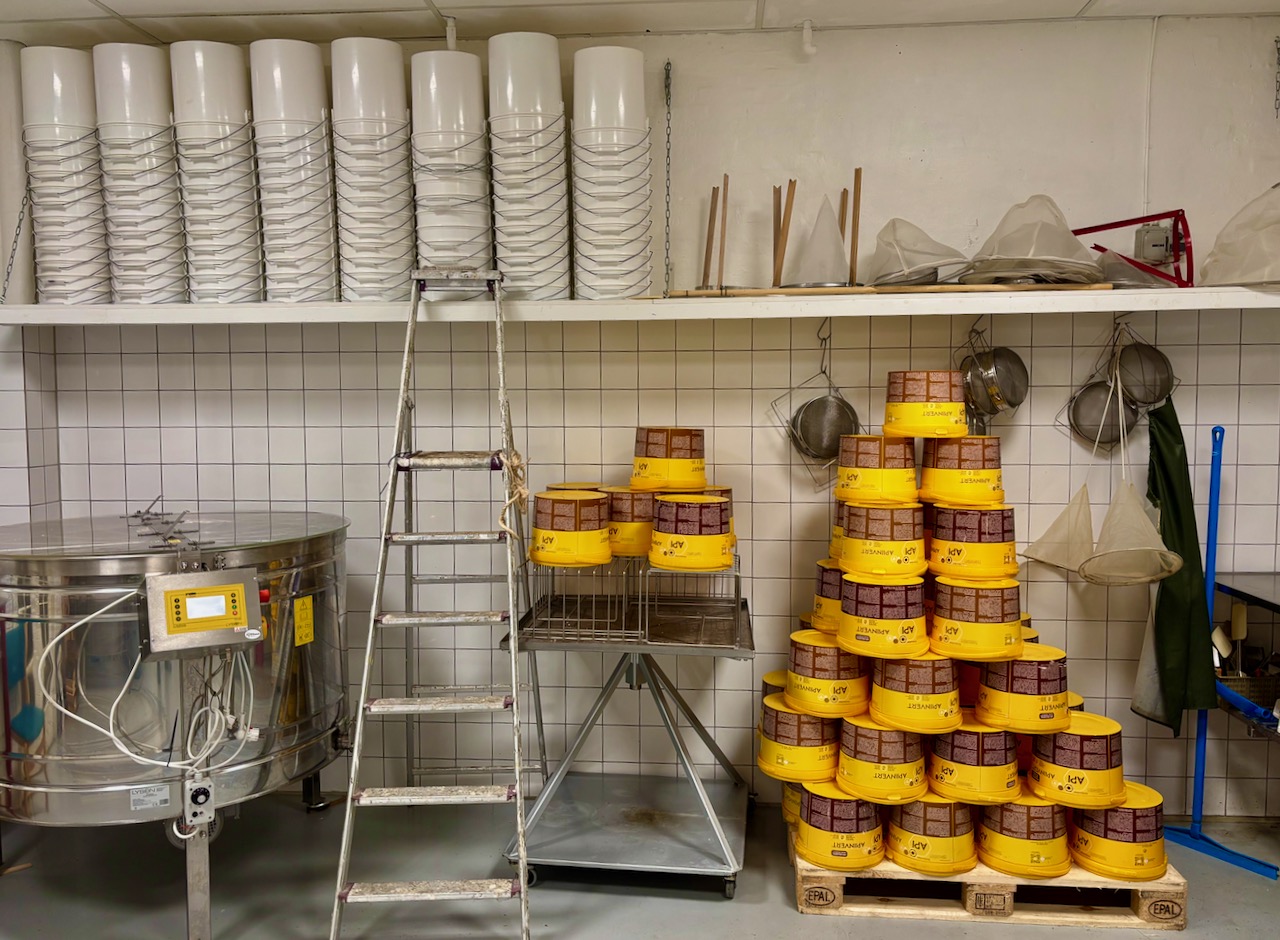
Visitors to Bybi are often struck by the rich smell of wax and honey as they enter the door. It was a bit different yesterday. We were washing the empty buckets from the syrup feed that we give the bees in the winter. It has a sour, sickly, slightly chemical smell. What is this stuff even made from?
It is normal practice in modern beekeeping, that you feed the bees with sugar syrup in the winter. In the spring, they start gathering nectar from flowers so there is no mixing between the feed and the nectar.
Honey and sugar syrup are not the same though. I like to imagine the winter bees slowly reliving their summer experiences as they share the honey during the winter. We know the taste and colour of each flower is unique. It must be like exploring an archive to them. The pollen grains and vitamins absorbed in the honey are not only nutritious, but full of memory and learning.
This is why we try to leave some honey for the bees to get them through the winter. But it is complicated. Last year, many of our colonies got sick. Our beekeeping consultant Kristine says that in some circumstances, the sugar syrup is a healthier for them than real honey. The late summer honey is rich and dark and gives the bees indigestion, she says. The sugar syrup is apparently easier to process.
This year, warm weather has stretched through September and into October. The bees munched through their winter stores and needed a top-up. This means more syrup. You can’t feed bees with honey, as this can spread diseases.
The feed is one of the awkward dilemmas we must confront. It looks sickly. It smells bad. Is it made from corn starch, like coca cola? Or German sugar-beets? Where does it come from? Who knows? If honey is an ‘invitation’ then what is this stuff inviting us to? What kind of invitation is it offering the bees?
Similar dilemmas are raised by other interventions we make with the bees. Denmark is heavily industrialised and there are a lot of rules about how you keep animals. You have to use beehives that can be inspected. We must coordinate with other beekeepers to treat against mites at the same time, so we avoid cross-contamination. This involves periodically drenching the bees in a mild, organic acid that causes the mites to drop off. It must also be very distressing for the bees. In the short term, it is better than dying from a mite-born virus. In the long term, it doesn’t help the bees to evolve a resistance to the mites.
It is a messy situation, filled with decisions that evoke doubt, bad conscious, or don’t resonate with our values in other areas. No decision is taken in isolation either. We are in constant dialogue with rules, conventions, experts, other beekeepers … not to mention books and videos.
It is like some of the other dilemmas that we share as individuals in our society. What do we feed our children? What risks and compromises can we afford to take with our work? These dilemmas are collective too and need to be discussed. Others remain firmly out of sight and most of us will avoid acknowledging them.
We don’t have an answer. The first step is to pay attention and notice the consequences of our decisions. The next is to be open and honest about the challenges we face.