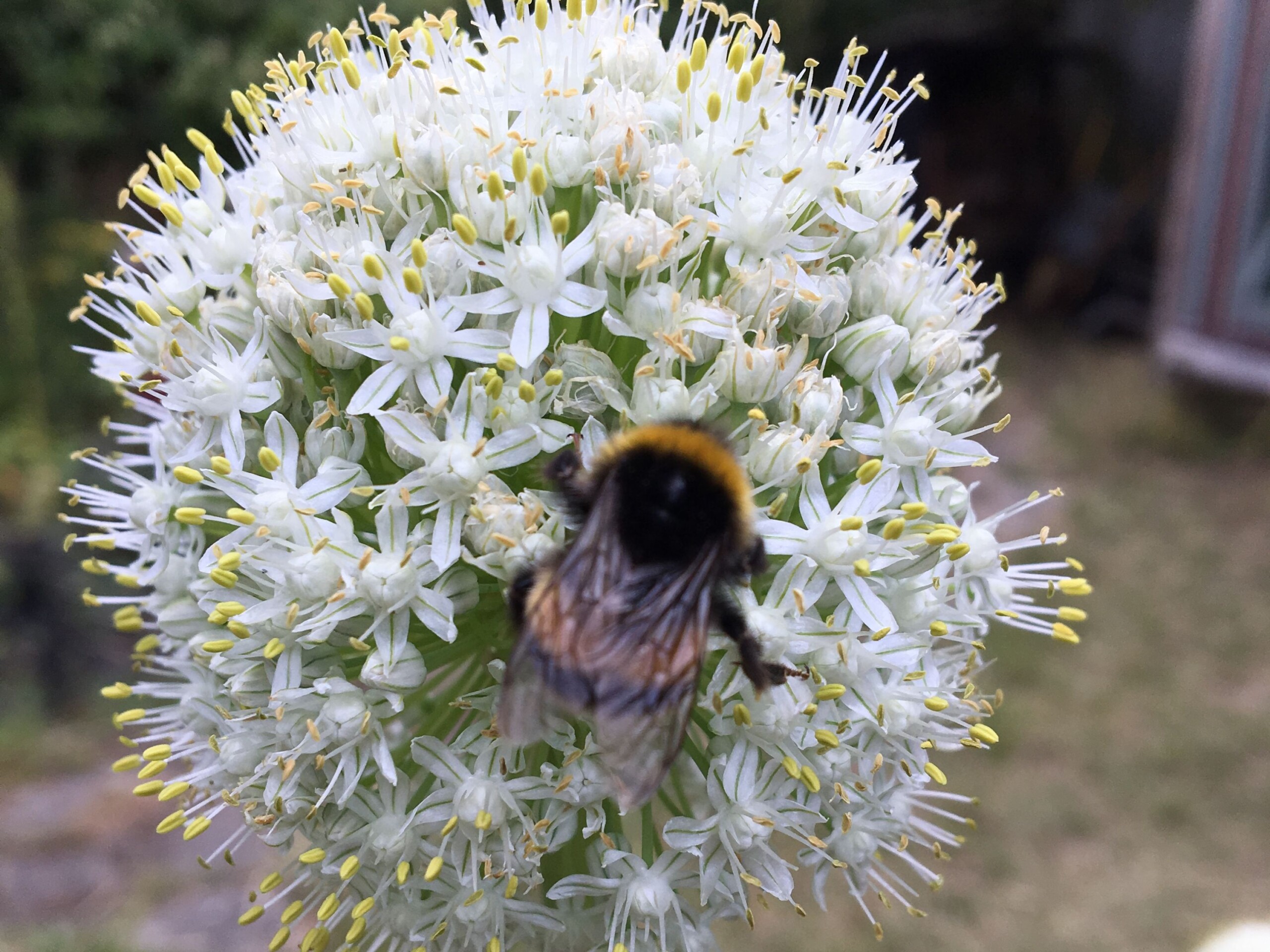
Wild Bees, Honeybees and people ... what's going on?
There are almost 300 species of bee in Denmark. Only one makes honey. Because of this, and their long relationship with people, honeybees tend to suck up more than their share of attention.
Studies from around the world show that importing honeybees into sensitive areas out-competes wild bees, adding an extra challenge to species already threatened by human activity.
These circumstances include turning national parks and protected areas into honey production zones, using honeybees to pollinate large scale industrial agriculture and the development European honeybees in territories where they are not native.
Yes, wild bees are threatened (along with countless other species and natural landscapes). Honeybees are not the solution. The problem is us, people, and an industrial, production mind-set that treats humans as bottomless, greedy consumers. We think that if you treat people as consumers, then people will act like consumers.
It is the same patten that drives growing inequalities, pressure on resources and fuels resentment and fear in human populations.
Some of those advocating for wild bees can be aggressive in their critique of honeybees and beekeeping. It is interesting to observe the language that is often used:
“Honeybees are not properly Danish”
“Honeybees spread diseases”
“Honeybees are taking the jobs from native bees”
“Beekeepers are only interested in money”
“Honeybees are controlled by a conspiracy of big agricultural interests in EU regulations”
“Honeybees are sexually promiscuous”
“Don’t trust the media on honeybees!”
“I’ve got nothing against honeybees in themselves … but I think there are too many of them and I don’t want them in my garden”.
So … bees are people. People are bees. We think that it is useful to go back to the basic assumptions about human nature that distinguish regenerative perspectives from perspectives that take competition and economic growth as inevitable.
We humans have the potential to enrich the living systems around us. We’ve done it for hundreds of thousands of years. Our current violence against the living world can only be a choice. Activating this potential is our current, collective, most urgent, responsibility.
We would ask a different question: What would our relationship with honeybees look like, if that relationship improved the conditions life to flourish in our neighbourhoods? That is to say honeybees, wild bees, people, insects and other animals too? Let’s keep asking that question and keep listening to each other.